

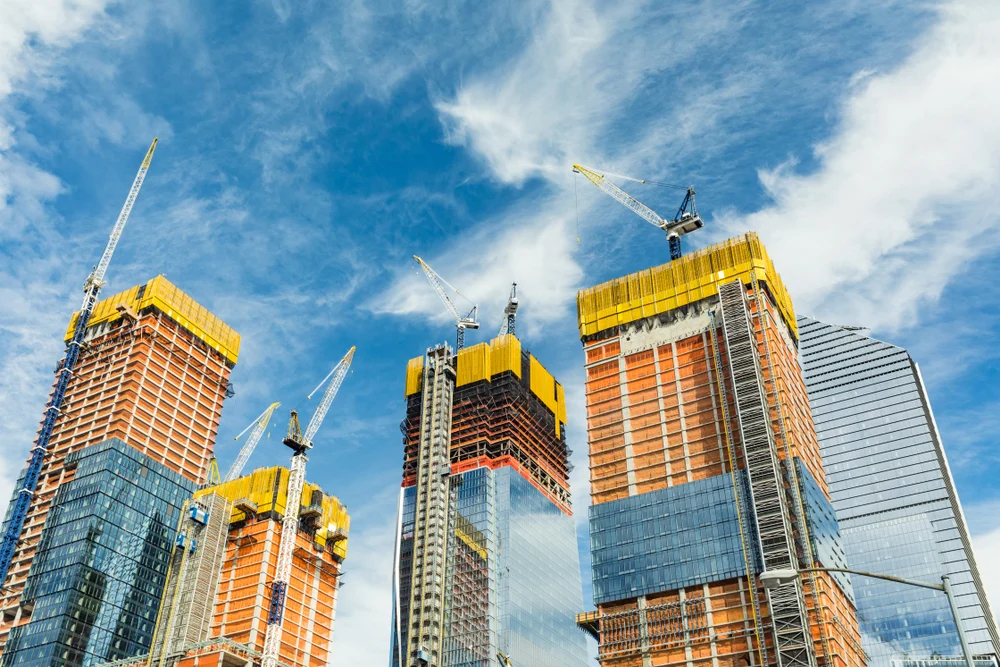
Cranes and other heavy equipment make construction in NYC possible, but they also leave very little room for error. When a lift is not properly controlled, a work area is not kept clear, or crews are not communicating the way they should, workers nearby can suffer life-changing injuries in seconds.
Common Heavy Machinery Accidents on NYC Sites
Heavy machinery plays a vital role on nearly every construction site, but each piece of equipment creates different hazards for the workers around it.
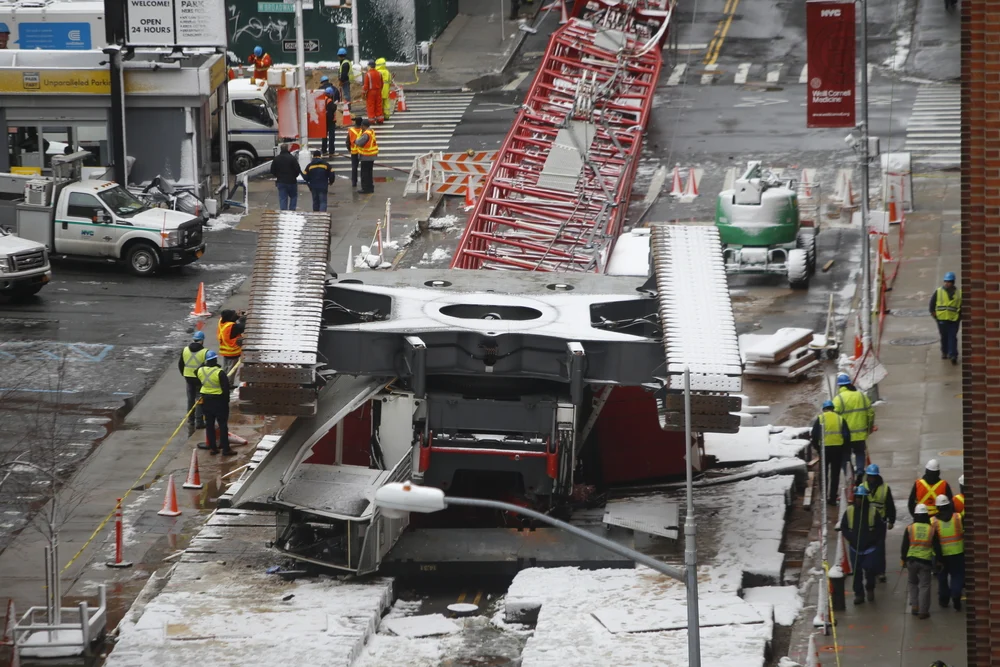
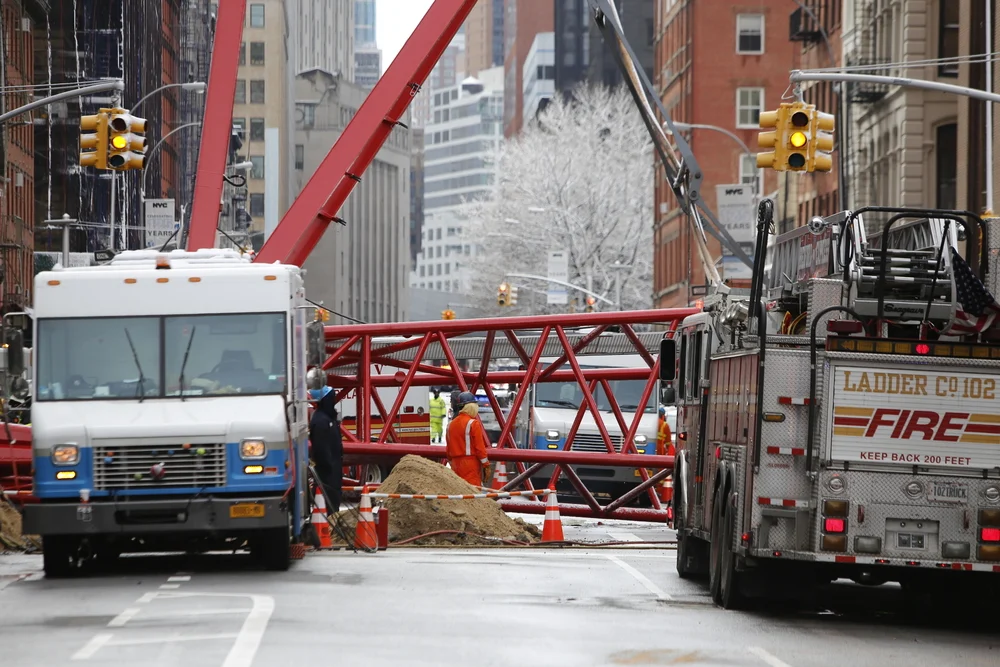
- Crane accidents: Workers are injured when cranes collapse, tip over, drop suspended loads, or swing materials into nearby work areas. Tower crane accidents in NY have devastating consequences due to the equipment’s size and the weight of the materials involved.
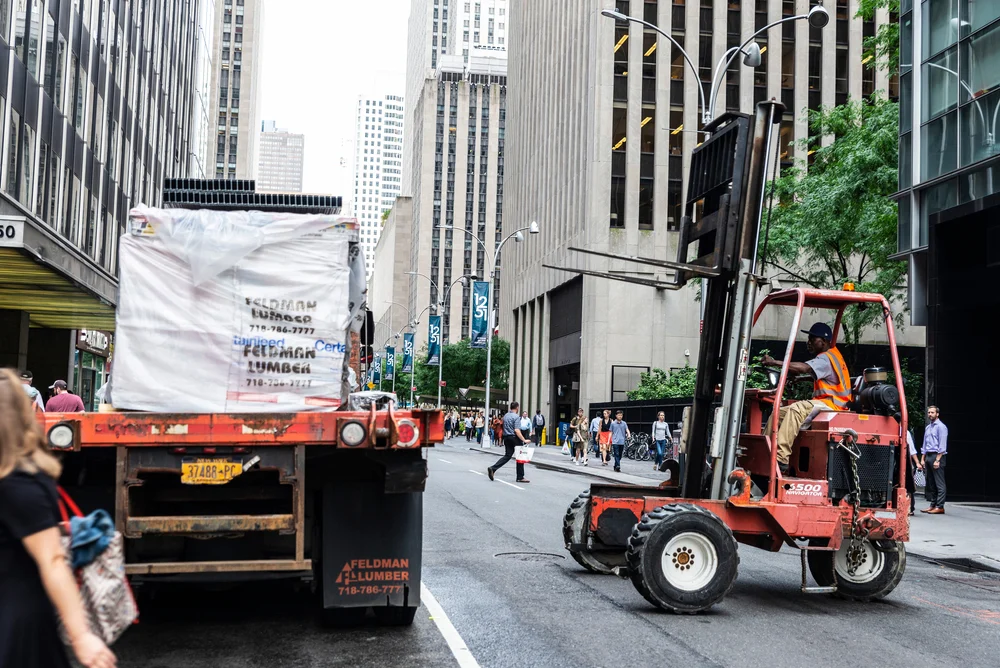
- Forklift accidents: Limited visibility, unstable loads, and congested work zones can lead to struck-by, caught-between, rollover, and crush injuries.
- Hoist and material lift accidents: Workers may be struck by falling materials or injured while loading, unloading, or working near active lifting operations.
- Excavator and backhoe accidents: Rotating equipment, blind spots, and inadequate separation between workers and machinery can result in serious struck-by injuries.
- Caught-between and crush accidents: Heavy equipment, vehicles, and building materials can pin workers against fixed objects or other machinery, causing catastrophic injuries.
Although these accidents involve different types of equipment, they share one important characteristic: they are rarely caused by a single mistake. On large construction projects, workers and supervisors from different trades perform separate tasks in the same area. This complicates identifying all responsible parties. Therefore, reconstructing the accident requires a close examination of the worksite, the people involved, and the safety procedures in place before the incident.
How New York Law Addresses Construction Machinery Accidents
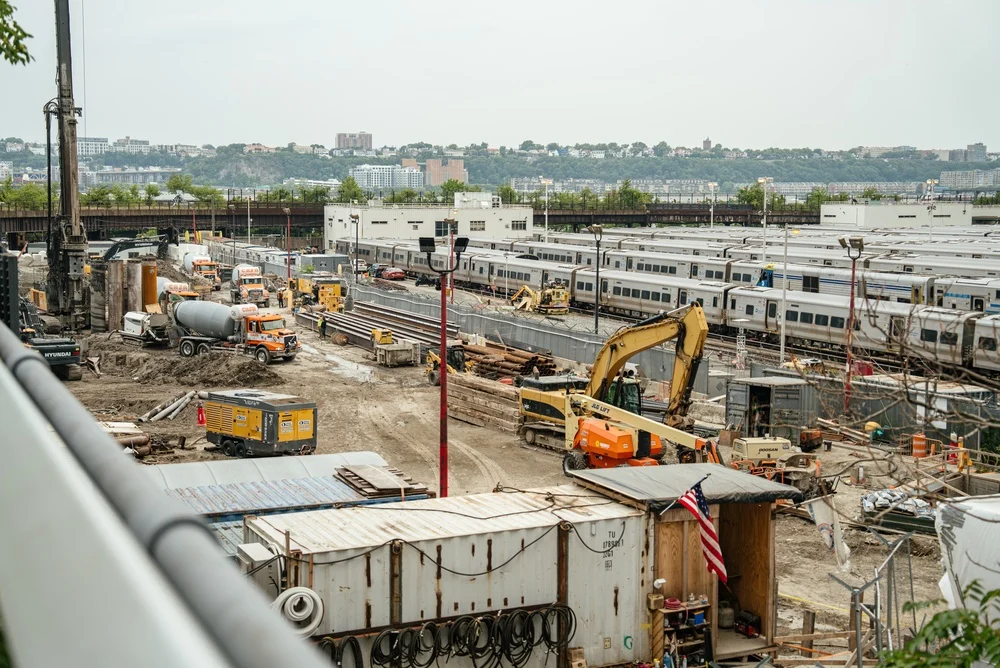
Construction sites throughout New York City are governed by detailed safety requirements designed to protect workers around cranes, forklifts, hoists, excavators, and other construction equipment.
Because crane operations take place high above active job sites and public spaces, they are subject to particularly extensive oversight, including permitting, operator qualifications, inspections, and other operational requirements. When these and other construction standards are not followed, New York’s Labor Laws provide important legal protections for injured workers.
When Falling Loads or Gravity-Related Hazards Cause Injuries
Materials being lifted to an upper floor can fall, suspended loads can break free, and workers can be struck by objects descending from above. These are exactly the types of elevation-related hazards that New York Labor Law 240(1), commonly known as the Scaffold Law, was designed to address.
Despite its name, the law extends far beyond scaffolds. It covers a variety of devices used to protect workers from gravity-related risks, including hoists and other equipment for raising or securing materials. When proper protection is not provided, and a worker is injured by a falling object or other elevation-related hazard, Labor Law 240(1) gives injured workers a powerful legal remedy.
Unlike many injury claims, workers covered by Labor Law 240(1) do not have to prove that they were free from fault. If a violation of the law contributed to the accident, contractors and certain building owners are responsible for the worker’s injuries. This strong protection reflects New York’s recognition that workers exposed to elevation-related hazards should not bear the consequences when required safety measures are missing or fail.
When Construction Safety Rules Are Violated
Not every heavy machinery accident involves a falling load or another elevation-related hazard. Many occur at ground level, where workers are exposed to moving equipment, active lifting operations, excavation work, and other hazards common on construction projects.
Labor Law 241(6) addresses many of these hazards. The law requires construction, demolition, and excavation work to comply with specific regulations designed to protect workers from a wide range of job-site hazards.
When Unsafe Site Conditions Contribute to an Accident
Some accidents are caused by unsafe conditions. A congested work area, inadequate supervision, poor coordination between crews, or dangerous work practices place workers at risk around dangerous equipment.
Labor Law 200 addresses these broader workplace obligations and reflects the principle that construction workers are entitled to a reasonably safe place to perform their jobs.
When dealing with these accidents, the key is not simply identifying the equipment involved, but understanding what conditions led to the injury and whether those conditions violated New York’s worker-protection laws.
Evidence That Strengthens a Heavy Machinery Accident Case
The equipment involved is only part of the story after a construction accident. Determining what happened requires a close examination of the worksite, the people involved, and the safety procedures in place before the incident.
Photographs and videos are especially valuable. Images of the accident scene capture the locations of equipment and materials, site conditions, warning barriers, and other details that explain how the accident unfolded. On larger projects, surveillance footage or recordings from nearby buildings also provide important insight.
Witnesses play a key role as well. Coworkers, supervisors, signal persons, and equipment operators may have observed events leading up to the accident that are not apparent from photographs alone. Their accounts establish how work was being performed and whether safety precautions were being followed.
These projects also generate a substantial amount of documentation. Daily logs, safety reports, inspection records, training records, lift plans, incident reports, and other project documents help investigators reconstruct the sequence of events. In crane and heavy machinery cases, these records reveal who was responsible for coordinating the work, what measures were required, and whether potential hazards were identified before the accident.
The strongest cases are built on a combination of evidence rather than a single piece of proof. When photographs, witness testimony, and site records tell the same story, they can provide a much clearer picture of how a serious machinery accident happened.
Real Results for Workers Who Suffered Construction Machinery Injuries in New York City
Oresky & Associates, PLLC, has spent more than 30 years representing injured construction workers and their families throughout New York. Over the past three decades, we have represented workers facing surgeries, months away from work, and uncertainty about their futures after serious accidents involving construction equipment.
One case involved a forklift accident at a construction site in New York, where a carpenter was struck while working nearby. The forklift was carrying containers that obstructed the operator’s forward view. Although a flagger was available, the forklift proceeded through the work area without one, running over the worker’s foot twice.
The worker suffered severe crush injuries that required multiple surgeries and extensive rehabilitation. After establishing that the forklift was being operated with an obstructed view and without available safety assistance, our team secured a $6 million settlement on the worker’s behalf.
Our firm has also represented workers and families in other serious construction equipment cases, including:
- After falling from a forklift, a construction helper faced serious injuries and multiple surgeries. The case ultimately resulted in a $7.5 million settlement.
- A construction worker suffered serious injuries when a materials hoist collapsed and struck him on the job. The worker later recovered $2.45 million.
- One family lost a loved one when the machine he was operating fell from the side of a building. The fatal construction accident resulted in a $3 million recovery for the surviving family members.
The value of these cases is not measured solely in dollars. For many injured workers and families, a successful outcome means access to medical care, financial security during recovery, and a sense that someone was finally held accountable for preventable harm. Those goals are just as important as the recovery itself.
Frequently Asked Questions
What if the Crane Operator Was Certified?
Operator certification is important, but it does not automatically mean an accident was unavoidable or that all safety requirements were followed. Safe crane operations depend on many factors, including lift planning, communication between crews, proper rigging, worksite conditions, and adherence to established procedures. A certified operator can still be involved in an accident if other aspects of the operation are not handled safely.
Who Can I Sue After a Crane or Machinery Accident?
Construction projects involve multiple companies working on the same project, which means responsibility for a crane or heavy machinery accident does not always rest with a single party. An injured worker may have a claim against a contractor, certain building owners, a subcontractor, or another party whose actions contributed to the accident.
Because heavy machinery accidents frequently involve overlapping responsibilities, identifying all potentially liable parties is an important part of the investigation.
Can I File a Lawsuit if I Am Already Receiving Workers’ Compensation?
In many cases, yes. Workers’ compensation benefits and third-party personal injury claims serve different purposes. Workers’ compensation provides medical benefits and partial wage replacement regardless of who caused the accident. A third-party claim, on the other hand, allows an injured worker to seek additional compensation from a party whose negligence contributed to the accident. Receiving workers’ compensation benefits does not automatically prevent you from pursuing a separate third-party claim.
Understanding Your Rights After a Construction Machinery Accident
Crane and heavy machinery accidents leave construction workers facing catastrophic injuries, lengthy recoveries, and uncertainty about the future. When preventable failures in jobsite and worker safety cause these accidents, injured parties have important legal rights under New York law.
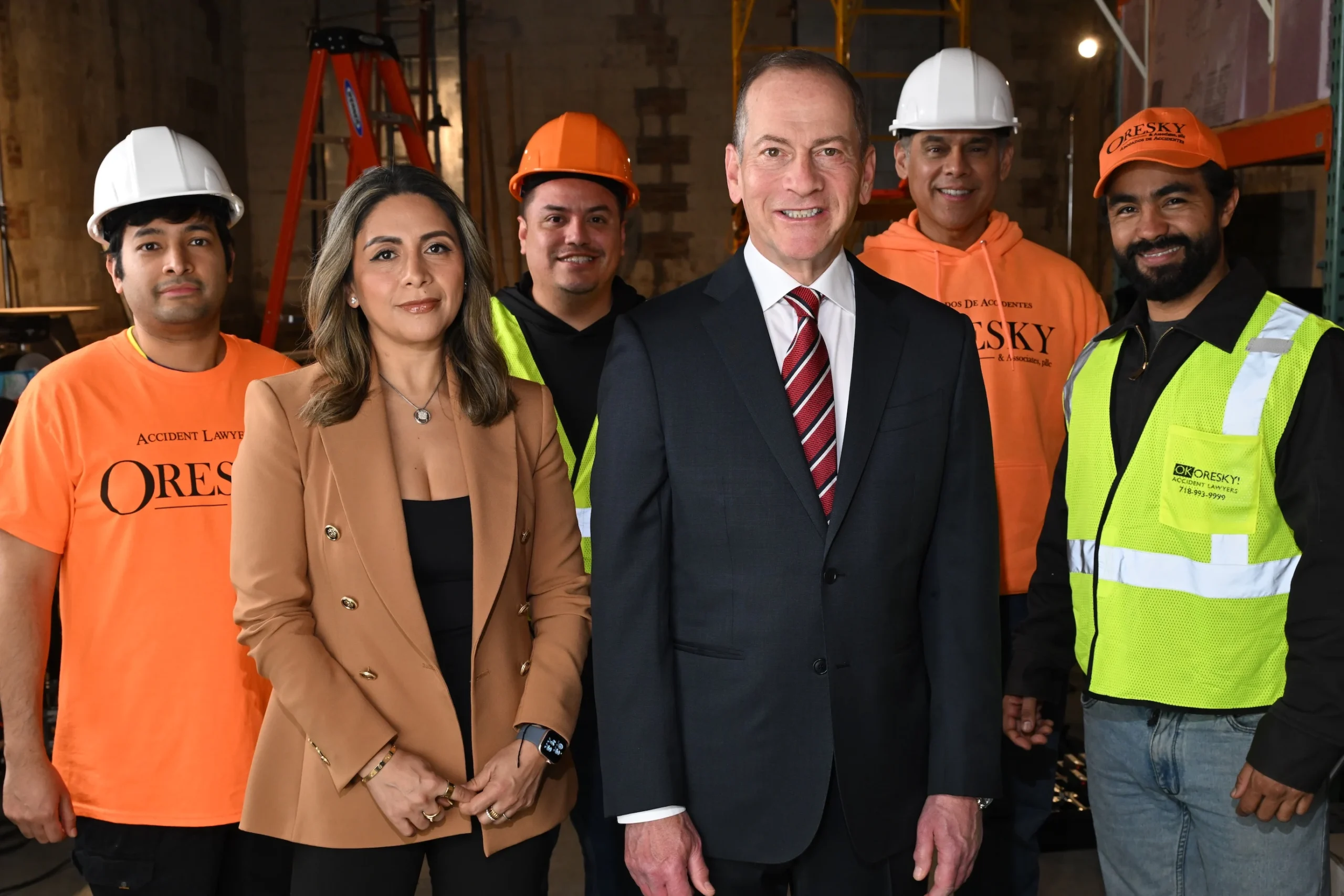
If you or a loved one was injured by equipment on a construction site, the NYC crane accident lawyers at Oresky & Associates, PLLC, can help you understand your options. To speak with our team, call (929) 209-4492.